Common foundation
Setting safeguards
Six rules written once and for all, applied across all your uses: never overwrite, never delete, never send, never write without validation.
The problem
An academic hospital physician handles co-authors’ manuscripts, student lists, department schedules and sometimes health data. An AI that overwrites a version, sends an email or changes a calendar without validation can destroy in one second the trust built up over a month.
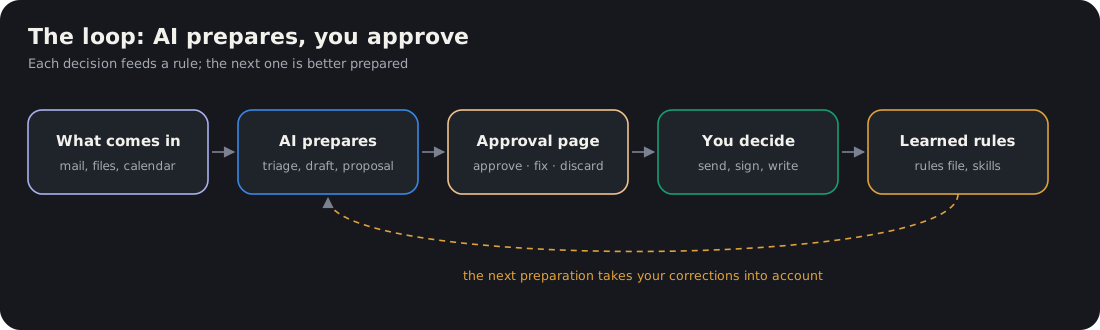
Figure. The AI prepares, you validate; your decisions become rules.
Step-by-step method
- Write the safeguards into your Claude preferences (Settings → Profile), so that they apply to every conversation. Example baseline:
- never delete a file: move it to
90_ARCHIVE; - never overwrite a file: any corrected version becomes
<name>_INITIALS-YYYYMMDD.<ext>next to the original; - mailboxes are read-only: no sending, no drafts, no labels; replies are proposed as text to copy;
- calendar: writing only after an explicit “accept”;
- institutional tools (department schedule, patient record): read-only;
- scheduled tasks: never created or modified without approval, and with a maximum budget.
- never delete a file: move it to
- Copy them into a file
_SYSTEME/00_REGLES.md, which every skill and every scheduled task reads first. - Require epistemic honesty: distinguish “verified / estimated / probable”, leave a “to be provided” box rather than invent, cite the DOI and PMID for every reference.
- Keep your hats separate: anything that belongs to industry-paid activity does not go into academic reports; attribution follows the payer, not the tool.
Deliverable
A block of preferences and a rules file, short, reviewed and dated.
Health data
No identifying patient data may be sent to a service your institution has not authorised. Pseudonymise locally, handle only aggregates in the AI, and check your institution’s policy with its data protection officer (DPO).
Starter prompt
Review my preferences and list every action you could take without my explicit approval. For each one, propose a one-line safeguard rule.